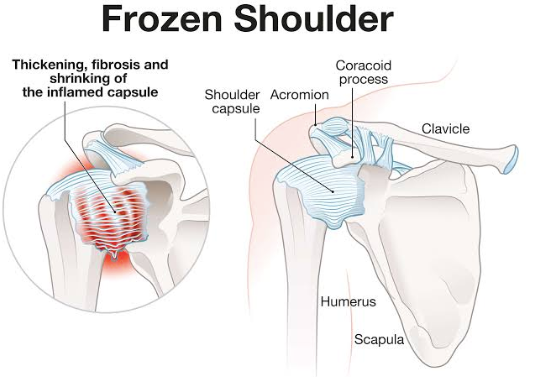
Frozen shoulder can make everyday movements surprisingly difficult. Reaching overhead, putting on a shirt, fastening a bra, reaching behind your back or even sleeping on the affected side can become painful and frustrating.
The good news is that frozen shoulder can improve with the right management and rehabilitation. Understanding what is happening and progressing exercises at the right pace can help you regain movement and confidence.
What Is a Frozen Shoulder?
Frozen shoulder, also known as adhesive capsulitis, occurs when the tissues surrounding the shoulder joint become painful and stiff.
Common symptoms include:
- Shoulder pain that develops gradually
- Increasing stiffness
- Difficulty lifting the arm
- Difficulty reaching behind your back
- Pain when sleeping
- Reduced ability to dress or perform household tasks
- Significant loss of shoulder movement
Frozen shoulder can occur without an obvious injury.
What Causes Frozen Shoulder?
Frozen shoulder can develop for several reasons.
Risk factors include:
- Previous shoulder injury or surgery
- Prolonged shoulder immobilisation
- Diabetes
- Thyroid conditions
- Increasing age, particularly between 40 and 60 years
- Previous frozen shoulder in the opposite shoulder
Sometimes, there is no clear cause. This is known as primary or idiopathic frozen shoulder.
The 3 Stages of Frozen Shoulder
Frozen shoulder typically progresses through three stages.
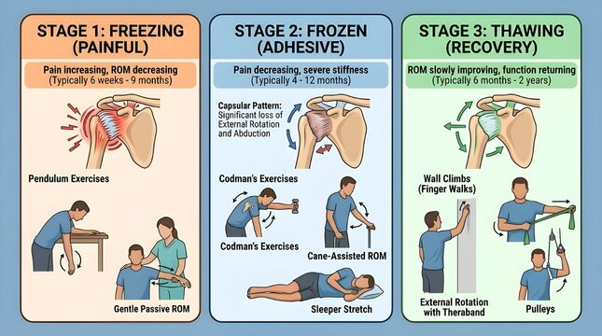
1. Freezing Stage
The shoulder gradually becomes more painful and movement starts to decrease.
You may notice:
- Increasing pain
- Night pain
- Difficulty finding a comfortable sleeping position
- Gradually reduced shoulder movement
This stage can last several months.
2. Frozen Stage
Pain may begin to settle, but stiffness becomes the main problem.
You may have difficulty:
- Reaching overhead
- Reaching behind your back
- Putting on a jacket
- Reaching for objects on high shelves
3. Thawing Stage
Shoulder movement gradually starts to return.
During this stage:
- Pain usually continues to improve
- Range of motion gradually increases
- Strength and function can be rebuilt
- Daily activities become easier
Recovery can take time, so patience and consistency are important.

7 Ways Physiotherapy Can Help Frozen Shoulder
1. Get the Shoulder Assessed
A physiotherapist can assess:
- Shoulder range of motion
- Strength
- Pain levels
- Functional limitations
- Movement patterns
This helps determine whether the symptoms are consistent with frozen shoulder or another shoulder condition.
2. Keep the Shoulder Moving
Complete rest can contribute to further stiffness.
Depending on your stage of recovery, exercises may include:
- Pendulum exercises
- Assisted shoulder elevation
- External rotation exercises
- Wall slides
- Gentle shoulder mobility exercises
The exercises should be matched to your irritability and stage of recovery.
3. Don’t Force Through Severe Pain
More stretching isn’t always better.
If an exercise causes significant or prolonged pain, your programme may need to be modified.
A physiotherapist can help determine:
- How far to move
- How often to exercise
- How much discomfort is acceptable
- When to progress the exercises
4. Gradually Rebuild Strength
As movement improves, strengthening becomes increasingly important.
Exercises may include:
- Resistance band exercises
- Rotator cuff strengthening
- Rows
- Shoulder raises
- Functional lifting exercises
Strength should be progressively increased as your shoulder tolerates more activity.
5. Manage Night Pain
Frozen shoulder can make sleeping difficult.
Try:
- Sleeping on your back
- Supporting your arm with a pillow
- Avoiding prolonged pressure on the painful shoulder
- Using heat before bed if it provides relief
- Completing gentle mobility exercises before sleeping
Improving sleep can make rehabilitation much easier.
6. Be Patient With Recovery
One of the biggest challenges with frozen shoulder is the recovery time.
Improvement is often gradual rather than immediate.
Your rehabilitation may need to change as your shoulder moves through each stage.
Consistency is more important than trying to force a quick recovery.
7. Keep Working Towards Your Normal Activities
The ultimate goal isn’t simply to improve shoulder movement.
It’s to help you return to:
- Work
- Exercise
- Driving
- Dressing independently
- Household activities
- Sleeping comfortably
- Hobbies and recreational activities
Your physiotherapist can gradually incorporate these activities into your rehabilitation programme.
When Should You See a Physiotherapist?
Consider getting your shoulder assessed if:
- Shoulder pain is progressively worsening
- Your range of movement is decreasing
- You are struggling to dress or reach overhead
- Shoulder pain is disturbing your sleep
- Symptoms are affecting work or exercise
- You have persistent shoulder stiffness
Early assessment can help identify the cause of your symptoms and establish an appropriate management plan.
When Should You Seek Further Medical Assessment?
Shoulder pain isn’t always caused by frozen shoulder.
Seek medical assessment if you experience:
- Significant trauma or a fall
- Sudden severe weakness
- Significant swelling or deformity
- Fever or redness around the joint
- Unexplained weight loss
- Chest pain or shortness of breath
Get Your Shoulder Moving Again
Frozen shoulder can be frustrating, particularly when simple everyday movements become difficult. With the right assessment, education and progressive rehabilitation, you can work towards improving your movement, strength and confidence.
At Essential Health Physiotherapy, our physiotherapists can assess your shoulder, identify the likely cause of your symptoms and develop a personalised rehabilitation programme based on your individual goals.
Don’t let a frozen shoulder keep you from doing the things you enjoy. Book a consultation today and take the first
If your pain is stopping you from hanging up the washing or lifting above head, call use on 07 3132 0898 for a physiotherapy assessment & treatment.
References
Kelley, M. J., Shaffer, M. A., Kuhn, J. E., Michener, L. A., Seitz, A. L., Uhl, T. L., Godges, J. J., & McClure, P. W. (2013). Shoulder pain and mobility deficits: Adhesive capsulitis. Journal of Orthopaedic & Sports Physical Therapy, 43(5), A1–A31. https://doi.org/10.2519/jospt.2013.0302
Page, P., Labbe, A., & Pienimäki, T. (2014). Adhesive capsulitis: Use of evidence-based clinical guidelines in physiotherapy. Journal of Orthopaedic & Sports Physical Therapy, 44(9), A1–A31.
Zhang, W., Lyu, Z., & Liu, X. (2022). Treatment of adhesive capsulitis: A systematic review and meta-analysis of randomised controlled trials. Journal of Rehabilitation Medicine, 54, jrm00307. https://doi.org/10.2340/jrm.v54.00307
Check our Previous Blogs
- Dizzy When Rolling in Bed? BPPV and Physiotherapy Treatment
- Plantar Fasciitis: The Real Reason That Heel Pain Keeps Coming Back
- 7 Essential Tips to Beat Frozen Shoulder and Get Your Movement Back
- Ehlers Danlos Syndrome (EDS): Exercising Safely With Dysautonomia
- Cervical Radiculopathy: Symptoms, Causes and Physiotherapy Treatment