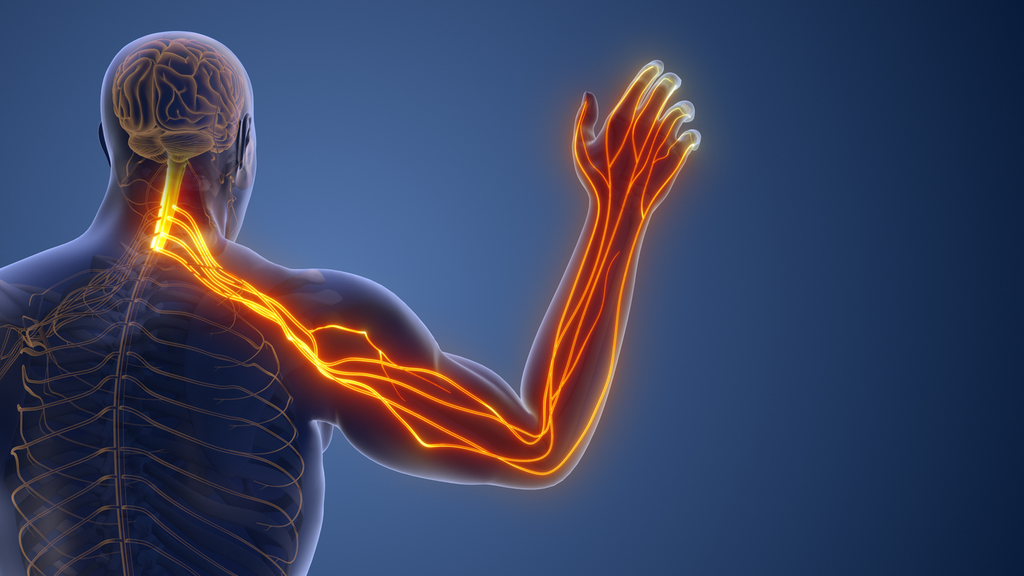
Key message Neck pain with arm pain, tingling, numbness or weakness may involve an irritated cervical nerve root. A detailed assessment helps confirm the pattern, rule out more serious conditions and guide treatment.
Pain that begins in the neck and travels into the shoulder, shoulder blade, arm or hand may be caused by cervical radiculopathy. Often described as a pinched nerve in the neck, the condition can also cause tingling, numbness, weakness or changes in reflexes. The symptoms can be uncomfortable and sometimes alarming, but many people improve with appropriate non-surgical care.
What is cervical radiculopathy
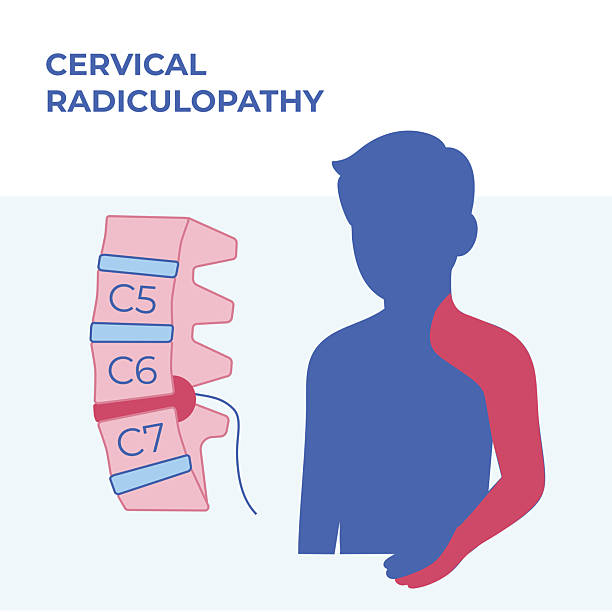
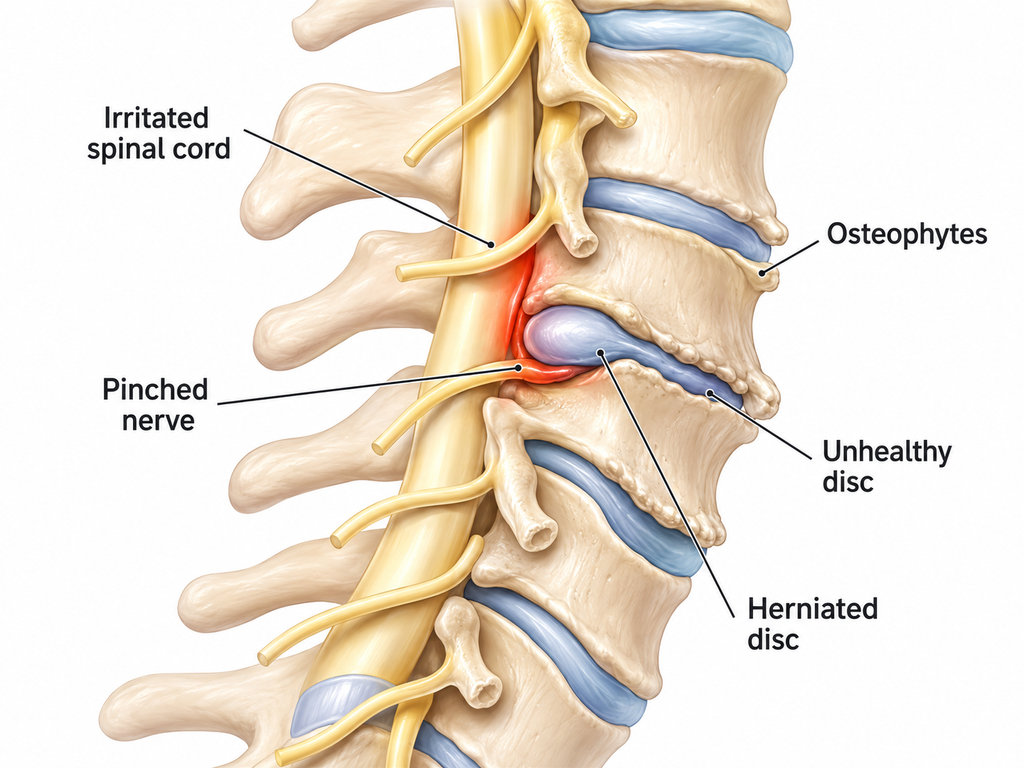
The cervical spine is made up of seven vertebrae in the neck. Nerve roots branch from the spinal cord and pass through small openings between the vertebrae before travelling into the shoulder, arm and hand. Cervical radiculopathy develops when one of these nerve roots becomes irritated or compressed.
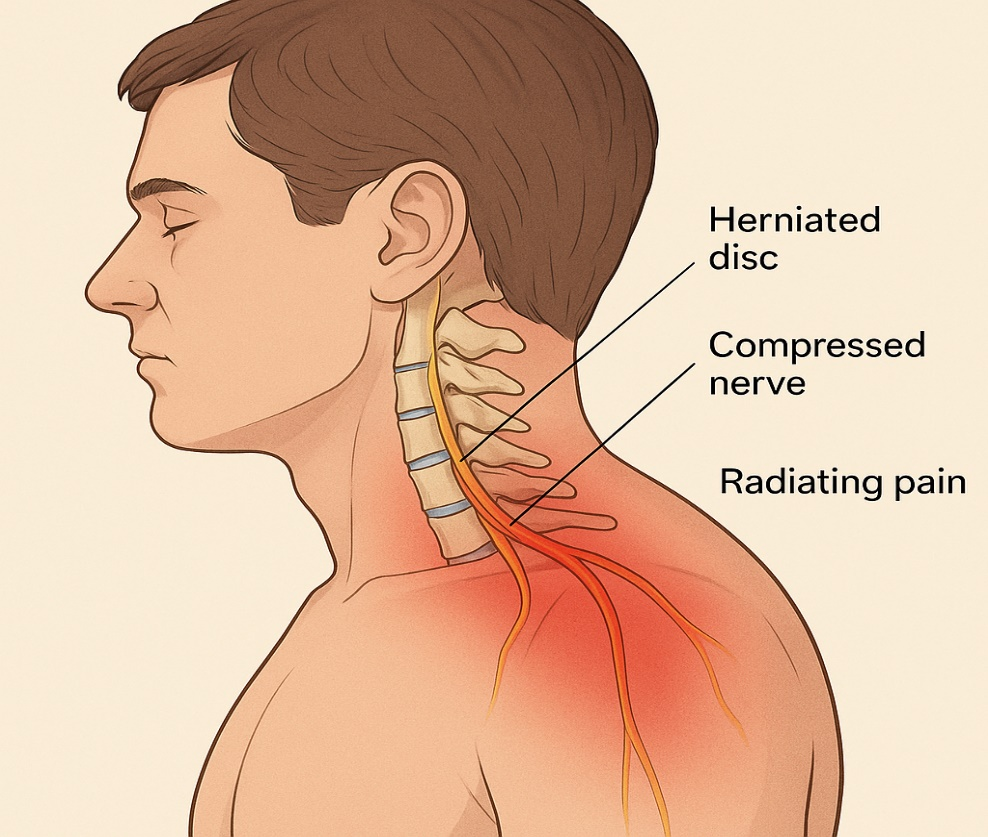
The most common causes are a disc bulge and age-related narrowing of the opening around the nerve, known as foraminal stenosis. Arthritis-related changes, including bone spurs, can contribute to this narrowing. Less commonly, symptoms may be linked to trauma, infection, inflammation or a tumour, which is why a careful assessment matters.
Common symptoms
Symptoms vary according to the nerve root involved. Pain may feel sharp, burning or aching and can spread from the neck into the shoulder blade, arm or fingers. Pins and needles, reduced sensation, weakness, reduced grip, dropping objects or difficulty with fine hand tasks may also occur. Looking up, turning the head, prolonged sitting, driving, lifting, coughing or sneezing can aggravate symptoms. Some people find that placing the affected hand on top of the head temporarily eases the arm pain.
Risk factors and triggers
Disc-related symptoms may begin suddenly after lifting, a quick neck movement, repeated bending or rotation, sport or a whiplash injury. Degenerative cervical radiculopathy more often develops gradually, with increasing stiffness and arm symptoms that worsen during sustained neck extension or rotation.
Previous neck injury, earlier episodes of neck or arm pain, smoking, reduced physical conditioning and repeated exposure to heavy manual work, lifting, vibration or prolonged neck postures may increase risk. These factors do not prove the source of pain, so symptoms should be assessed rather than diagnosed from a scan or one movement alone.
How a physiotherapist assesses cervical radiculopathy
Your physiotherapist will ask how the symptoms started, where they travel and which activities change them. The physical examination may include neck and shoulder movement, muscle strength, sensation, reflexes and grip. Tests such as Spurling’s test and upper-limb nerve tension testing may help reproduce or relieve familiar symptoms. A cluster of findings is more useful than relying on a single test.
The assessment also checks for other causes of neck and arm symptoms. These include shoulder conditions, carpal or cubital tunnel syndrome, thoracic outlet syndrome, local neck joint or disc pain and, less commonly, cervical myelopathy, vascular problems, infection or a tumour at the top of the lung. Imaging or medical review may be recommended after significant trauma, when neurological loss is progressing, when red flags are present or when symptoms do not settle as expected.
How physiotherapy treatment can help
Treatment is matched to your presentation rather than using the same program for everyone. Early management usually includes education, reassurance and temporary modification of the movements or workloads that are most aggravating. Complete rest is rarely the goal. Staying active within tolerable limits can help maintain movement and confidence while the irritated nerve settles.
A rehabilitation plan may include exercises to restore comfortable neck movement, improve neck and shoulder-blade control, strengthen the upper limb and gradually rebuild tolerance for work, driving, sport or gym activity. Nerve-mobility exercises may be used when appropriate. Hands-on treatment, such as cervical or thoracic mobilisation, soft-tissue techniques or a trial of traction, may reduce symptoms for some people and support active rehabilitation. Your physiotherapist can also help adjust lifting technique, workstation setup and activity pacing. Most cases are initially managed without surgery. Referral to a GP or specialist may be appropriate when pain remains severe, symptoms persist despite well-planned conservative care, or weakness and other neurological changes are significant or worsening.
When to seek urgent medical care
Arrange urgent medical assessment if you develop rapidly worsening arm or hand weakness, marked loss of coordination, increasing difficulty walking or balancing, symptoms in both arms or legs, or new bladder or bowel changes. Prompt review is also important after major trauma or when neck and arm pain occurs with fever, unexplained weight loss, a history of cancer, severe unrelenting night pain, chest pain or shortness of breath.
Book a physiotherapy assessment
If neck pain is travelling into your shoulder, arm or hand & it’s stopping you from doing the things you love, book with Essential Health Physiotherapy at Shailer Park, Birkdale or Bracken Ridge to get pain-free & moving again.
General information only This article does not replace individual medical advice. Call 000 for severe or life-threatening symptoms.
Call us at 07 3132 0898
References
1. American Academy of Orthopaedic Surgeons. Cervical Radiculopathy Pinched Nerve. OrthoInfo. https://www.orthoinfo.org/diseases–conditions/cervical-radiculopathy-pinched-nerve/
2. Blanpied PR, Gross AR, Elliott JM, et al. Neck Pain Revision 2017 Clinical Practice Guidelines. Journal of Orthopaedic and Sports Physical Therapy. 2017;47(7):A1-A83. https://doi.org/10.2519/jospt.2017.0302
3. Taso M, Sommernes JH, Sundseth J, et al. Surgical versus Nonsurgical Treatment for Cervical Radiculopathy. NEJM Evidence. 2025;4(4):EVIDoa2400404. https://doi.org/10.1056/EVIDoa2400404
Check our Previous Blogs
- Dizzy When Rolling in Bed? BPPV and Physiotherapy Treatment
- Plantar Fasciitis: The Real Reason That Heel Pain Keeps Coming Back
- 7 Essential Tips to Beat Frozen Shoulder and Get Your Movement Back
- Ehlers Danlos Syndrome (EDS): Exercising Safely With Dysautonomia
- Cervical Radiculopathy: Symptoms, Causes and Physiotherapy Treatment