
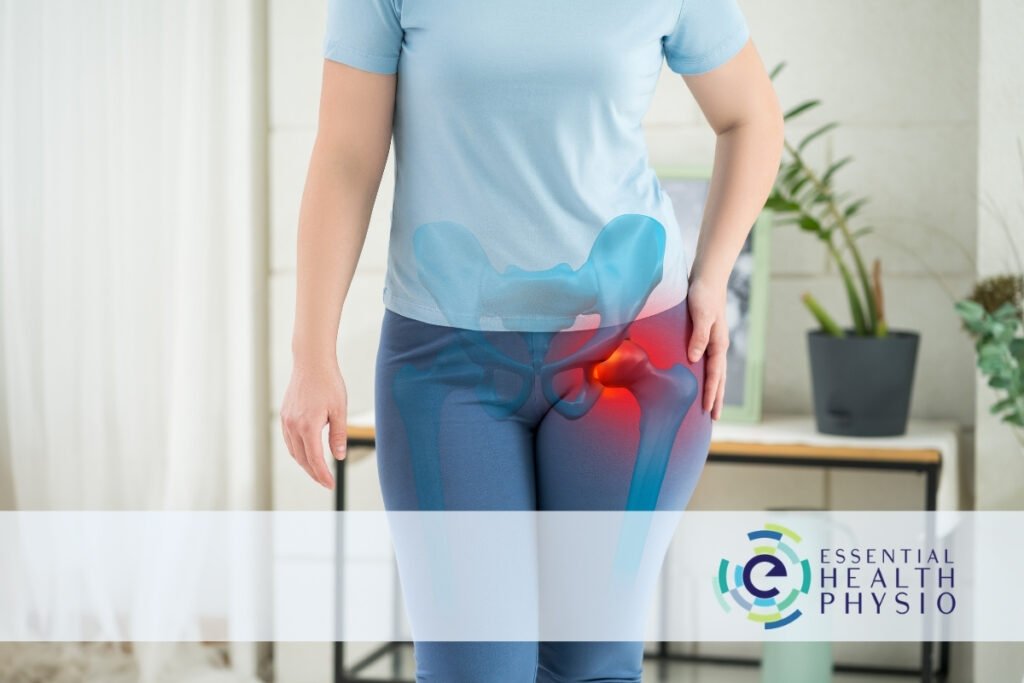
You get up from your desk after a long stretch of back-to-back meetings and there it is again, that dull ache along the side of your hip. Or maybe it works the other way around: you’re a few streets into your regular walk around the Redlands and your hip starts to tighten, then slow you down. Hip pain when walking, or hip pain that flares after sitting too long, is one of the most common complaints physiotherapists see in adults over 45. It doesn’t mean the same thing for everyone, and the two groups who experience it most differently are sedentary office workers and active older adults still chasing their usual pace of life.
What’s Behind Hip Pain When Walking or After Sitting Too Long
There isn’t a single item on the list of hip pain causes that explains this for everyone. Two very different day-to-day patterns tend to land people with a similar symptom.
If Your Days Are Mostly Spent Sitting
Long hours at a desk reduce how much your hip joint moves through its full range. The muscles around your hip and glutes gradually lose some strength and responsiveness, simply because they’re not being asked to do much. Stiffness plus weakness is often what turns a short walk to the kitchen or a flight of stairs into something that pulls at your hip in an unfamiliar way.
If You’re Staying Active Later in Life
For people still walking, gardening, playing golf or heading to the gym, hip pain more often comes from overuse, a recent jump in activity, or tendon and muscle irritation. Previous injuries can resurface too, as can the joint changes that come with age. None of this means you need to stop moving. It usually means the loading on your hip needs adjusting rather than avoiding altogether.
It’s also worth knowing that hip pain doesn’t always start in the hip joint itself. The lower back, surrounding muscles and nearby joints can all refer pain into the hip, groin or outer thigh, which is part of why persistent or worsening symptoms are worth having assessed rather than guessed at.
Common Symptoms Worth Paying Attention To
The presentation varies from person to person, but a few patterns come up again and again in clinic:
- Aching or stiffness around the hip, groin, buttock or outer thigh
- Hip pain when sitting for long periods, at a desk or in the car, followed by stiffness on standing
- Discomfort that builds the longer you walk or stand
- Trouble getting up out of a low chair or the car
- Reduced flexibility, noticeable when putting on shoes and socks
- Pain that’s started creeping into exercise, work or everyday tasks you didn’t think twice about before
None of these symptoms on their own point to a specific diagnosis. Together, and especially if they’re progressing, they’re a reasonable prompt to get things looked at.
When Hip Osteoarthritis Might Be Part of the Picture
Hip osteoarthritis is one of the more common findings in this age group, particularly where stiffness and pain build up gradually rather than appearing overnight. Walking, using stairs, or standing up after sitting for a while tend to be the movements that highlight it first. That doesn’t mean every ache in this pattern is osteoarthritis. It does mean it’s a reasonable possibility worth ruling in or out with a proper assessment, especially given how much can be done through arthritis management once the picture is clearer.
How Physiotherapy Can Help With Hip Pain
For most people in this demographic, physiotherapy for hip pain is less about chasing a single fix and more about reducing symptoms while rebuilding movement, strength and confidence in the activities that matter to you.
Treatment usually draws on a few tools, depending on what’s driving your symptoms:
Manual therapy.
Hands-on treatment, including joint mobilisation and soft-tissue work, can help settle stiffness and restricted movement, particularly in the early stages.
Dry needling.
Where clinically appropriate, dry needling can help address muscular tension contributing to your symptoms. It works best as one part of a broader plan rather than a standalone answer.
Individualised hip pain exercises.
What you’re given depends on your presentation and goals. An office worker’s program might focus on breaking up long sitting periods and rebuilding hip and glute strength. An active older adult’s program is more likely to progressively build strength, mobility and balance, so you can keep doing the walking, golf or gardening you enjoy.
The exercise piece is often the part people feel most nervous about, so it’s worth repeating: exercise doesn’t have to mean pushing through hip pain. A physiotherapist works out where your hip is currently at and builds the challenge up from there, not the other way around.
What This Looks Like at Essential Health Physiotherapy in Birkdale
At the Birkdale clinic, hip and groin problems, arthritis and joint pain, and general mobility issues are among the conditions seen regularly. Four elements tend to work together in a typical plan.
Assessment and treatment.
Your physiotherapist works out what’s contributing to your hip pain and treats it directly, using mobilisations and soft-tissue techniques where they’re appropriate.
Dry needling.
Offered as an additional option depending on your presentation, not as a default part of every visit.
Physiotherapist-prescribed exercise.
A starting point for restoring hip mobility, strength and function, built around where you’re actually at rather than a generic template.
Exercise physiology.
Exercise physiology support helps you progress beyond the initial rehab phase into something sustainable, whether that’s general fitness, strength work or falls prevention.
For people who’d rather keep moving alongside others than train alone, the clinic also runs small-group classes. The Mat Exercise Class is capped at six participants so there’s still room for individual attention, and it’s one of the options available at the Birkdale location. There’s also the Better Bone Balance Class, an eight-week program combining exercise with bone-health education, for anyone wanting ongoing support once the initial pain has settled.
When It’s Worth Getting Checked Properly
Not every twinge needs an appointment. But hip pain that’s steadily getting worse, that’s started limiting how far you can walk or how long you can sit comfortably, or that hasn’t responded to a bit of rest and gentle movement, is worth having assessed. This is especially true if you’re not sure whether the pain is coming from your hip, your lower back, or somewhere in between, since that distinction changes what treatment looks like.
Hip Pain And Physiotherapy: Your Questions Answered
| Question | Answer |
|---|---|
| Why does my hip hurt more when I sit for a long time? | Long periods of sitting reduce how much your hip joint moves and can lead to weakness in the surrounding muscles. When you do stand or walk, that combination of stiffness and reduced strength can show up as aching or tightness around the hip, groin or outer thigh. |
| Is hip pain when walking always a sign of arthritis? | Not necessarily. Hip pain when walking can come from muscle or tendon irritation, overuse, or reduced hip mobility from prolonged sitting. Hip osteoarthritis is one possible cause, particularly where stiffness has built up gradually, but a physiotherapy assessment is the best way to understand what’s actually happening. |
| Can hip pain actually be coming from my lower back? | Yes. The lower back, surrounding muscles and nearby joints can all refer pain into the hip, groin or thigh. This is one reason persistent hip pain is worth having properly assessed rather than treated based on guesswork alone. |
| What does physiotherapy treatment for hip pain usually involve? | Treatment is tailored to your presentation and may include manual therapy, dry needling where appropriate, and an individualised exercise program. The goal is to reduce symptoms while gradually rebuilding hip strength, mobility and confidence in everyday movement. |
| Do I need to stop walking or exercising if my hip hurts? | Not usually. Exercise doesn’t have to mean pushing through hip pain. A physiotherapist can work out where your hip is currently at and build a program that adjusts your activity levels rather than removing them altogether. |
| What should I expect at my first physiotherapy appointment for hip pain? | At Essential Health Physiotherapy Birkdale, new patients receive a full assessment to identify what’s contributing to their hip pain. From there, your physiotherapist can recommend a treatment and exercise plan based on your goals and lifestyle. |
The Takeaway
Hip pain when walking or after long periods of sitting is common in adults over 45, and it usually has an identifiable, manageable cause rather than being something you simply have to live with. Whether it’s stiffness from too many desk-bound hours or the early signs of hip osteoarthritis in someone who’s staying active, an accurate assessment makes the difference between guessing at exercises and building a plan that actually fits your hip and your life.
If hip pain has started interfering with your walks, your workday or getting comfortable in a chair, book an assessment with the team at Essential Health Physiotherapy in Birkdale.
