
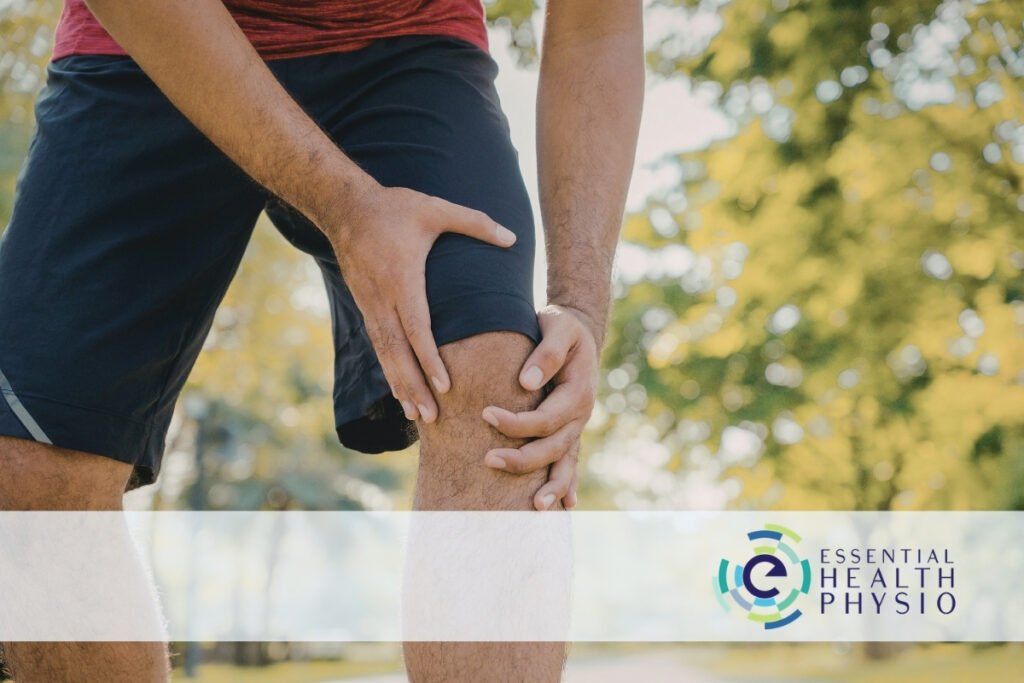
Somewhere in the second week of a new training block, a sharp little ache shows up on the outside of your knee. It starts around the two kilometre mark, fades when you stop, and is waiting for you again the next morning on the stairs. If that sounds familiar, IT band syndrome is one of the first things a physio will want to look at.
October is prime time for it. Fun runs are back on the calendar around Logan, marathon plans kick off, and weekly distance climbs faster than it did all winter. The knee usually complains before the legs do.
What IT band syndrome actually is
The iliotibial band (the IT band) is a thick strip of connective tissue that runs from your hip down the outside of your thigh and attaches just below the knee. It helps stabilise the hip and knee as you move. IT band syndrome is the name given to pain that builds where the lower end of that band passes over the bony bump on the outside of your knee.
The old explanation was that the band rubs back and forth over the bone. Current thinking leans towards compression of sensitive tissue underneath the band, which peaks when the knee is bent about 30 degrees. That angle sits right around foot strike in a run, so a single session can load the area thousands of times.
Symptoms: what outer knee pain from running tends to feel like
Most runners describe a sharp or burning ache on the outer side of the knee. Some feel it spread up the thigh or down towards the shin, and a few notice a snapping sensation as the knee bends. The pain often turns up after a predictable distance or time, then eases off when you slow to a walk on flat ground.
Downhill running, stairs and the last stretch of a long run usually make it worse. The spot on the bony point of the outer knee can be tender to press. Early on you might only feel it during a run. Left alone, it can start showing up when you walk, sit with your knee bent for a while, or climb out of the car.
IT band syndrome gets mixed up with runner’s knee all the time. Runner’s knee generally describes pain around or behind the kneecap, at the front of the joint. Outer knee pain points more towards the IT band. Both are common running knee injuries and both respond to a good look at how you load your body, but they are managed a little differently, so it pays to know which one you have.
Why spring running ramps up the risk
IT band syndrome is an overuse problem. Something has asked the tissue to do more than it was ready for, and spring training is good at doing exactly that. A jump in weekly distance, extra speed sessions, a new hilly route and a pair of shoes with 800 kilometres on them can all arrive in the same fortnight.
Hip strength comes into it as well. Runners with IT band pain often show weaker hip abductor muscles on the side of the sore knee. When those muscles tire, the pelvis can drop and the knee drifts inwards on landing, which adds load along the outside of the leg. Research has linked this pattern to the condition without proving it is always the cause, which is part of why a proper assessment beats guessing.
Other contributors include running on cambered roads, always looping the same direction on a track, long downhill sections and back-to-back run days with little recovery. Several of these tend to stack up together. That is why changing one thing, such as buying new shoes, rarely fixes the problem on its own.
The “tight IT band” idea only gets you part of the way
Plenty of runners are told to stretch and foam roll the IT band. The band itself is very stiff tissue, and the evidence suggests that stretching it does not lengthen it in any meaningful way. Rolling the outside of the thigh may take the edge off the discomfort for a short time. It does not address the load that irritated the area to begin with.
Working on the muscles that attach to it, like the glutes and the tensor fasciae latae at the hip, tends to be more useful. So does fixing the training pattern that set things off.
Should you run through it?
Most runners do not need to stop altogether, and sharp pain is a signal to back off. A common starting point is to cut back the distance or intensity until the knee settles, avoid downhill sections and stairs where you can, and swap some runs for swimming or pool running to keep your fitness ticking over. Many physios use a rule of thumb that mild discomfort which settles within 24 hours is acceptable. Pain that builds during a run or lingers the next day means you have gone too far.
Cycling suits some people and irritates the knee for others, so go by how it feels afterwards. If the pain forces you to change your stride or limp, that is your cue to book in rather than keep testing it.
IT band syndrome treatment with a physio
Good IT band syndrome treatment starts with working out why your knee is sore. At Essential Health Physio, a sports injury physiotherapy assessment runs for a full hour. Your physio will look at hip and thigh strength, how well you control your body on one leg, your running pattern and your recent training log. You leave with a written plan rather than a list of things to try.
Treatment is built around what the assessment finds. It can include adjusting your running load, progressive strengthening for the hip and thigh, hands-on techniques to ease symptoms in the short term, and changes to how you run, such as cadence or step width. A graded return-to-running plan then sets out how far and how fast to go each week.
Imaging is not normally needed for IT band syndrome, since it is diagnosed from your history and a physical examination. Your physio may refer you for a scan if something does not fit the typical picture. Surgery seldom comes up. Recovery time varies with how long the pain has been there and how much your training changes, and for many runners it takes several weeks of consistent work rather than a few days.
Signs it might be something else
Book an assessment sooner if the knee swelled up, locked or gave way, if you felt a pop during a twist or a fall, if you have pain at rest or at night, or if you notice numbness or pins and needles in the leg. Pain that has not improved after a couple of weeks of backing off also deserves a proper look. If you cannot put weight through the leg at all, see a doctor or head to an emergency department.
Keeping it from coming back
Strength work done during the injury is worth continuing after the pain goes, since the hip muscles are the ones that keep fatiguing late in a long run. Build volume in small steps, vary your routes and direction, and replace shoes before they are worn flat. Plan an easy week every so often so the tissue gets a chance to adapt.
Your past injuries matter here too. A rolled ankle that never got rehabilitated can change how the whole leg loads when you run. If that sounds like your history, our guide to a sprained ankle covers what a proper recovery looks like before you pick the pace back up.
IT Band Syndrome: Your Questions Answered
| Question | Answer |
|---|---|
| What is IT band syndrome? | IT band syndrome is an overuse problem that causes pain on the outer side of the knee. It happens where the lower end of the iliotibial band passes over the bony point of the knee, and it is common in runners who increase their training load quickly. |
| Is IT band syndrome the same as runner’s knee? | No. Runner’s knee usually means pain around or behind the kneecap at the front of the joint. IT band syndrome causes pain on the outside of the knee. The two are often confused, and a physio can tell them apart with an assessment. |
| Does stretching the IT band help? | Stretching does not appear to lengthen the IT band in a meaningful way, though it may ease discomfort briefly. Strengthening the hip muscles, adjusting your training load and improving how you control your leg when running generally give better results for IT band syndrome treatment. |
| Can I run through IT band pain? | Mild discomfort that settles within a day may be acceptable, but pain that builds during a run or lingers afterwards suggests you are overloading the area. Reduce distance and hills, cross-train where it feels comfortable, and book a physio assessment if the pain keeps returning. |
| Do I need a scan or surgery for IT band syndrome? | Most cases are diagnosed from your history and a physical examination, so imaging is not normally needed. Your physio may suggest a scan if your symptoms do not fit the typical pattern. Surgery seldom comes into it for this overuse knee injury. |

Final thoughts
IT band syndrome is common, well understood and very manageable when it is picked up early. The runners who stay on top of it tend to be the ones who deal with the first twinge on the outer knee instead of waiting for it to stop them mid-race. Look at your training load, look at your hips, and get a physio to check what is really going on. Then you can plan your spring events around your running rather than around your knee.
If outer knee pain is getting in the way of your training, book a sports injury assessment at Essential Health Physio and get a clear plan for the weeks ahead.
