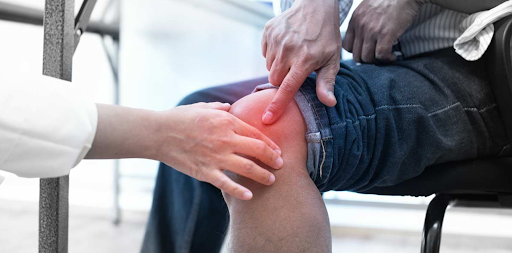
Snap, crackle, pop. If your knee sounds like a bowl of Rice Bubbles and your X-ray report says “bone on bone”, it’s easy to assume the worst.
A lot of the people I see come in worried after reading their report. They think their knee is worn out, that exercise will make it worse, and that surgery is the only option left. One of the first things I tell them is that the scan is only part of the picture.
Your Scan Is Only Part of the Picture
An X-ray is useful for confirming knee osteoarthritis. What it can’t show is how much pain you will have or what you’re capable of.
A review of the research found that X-ray changes and knee pain often don’t line up. Many people with clear arthritis on imaging have little or no pain, while others with only mild changes struggle every day [1]. Some people with “bone on bone” knees still walk the Wellington Point foreshore and garden every weekend.
Your scan also can’t measure:
- How strong your thigh and hip muscles are
- How well you control your knee on stairs and slopes
- How much activity your knee can currently tolerate
- How your pain responds to movement
These play a big part in your symptoms, and they can often be improved.
Treat the Knee, Not the X-ray

Exercise is the recommended first-line treatment for knee osteoarthritis, regardless of what the X-ray shows [2, 3]. Stronger muscles take load off the joint, and movement helps keep it healthy. Some discomfort during exercise is normal and safe.
Alongside exercise, losing a small amount of weight can also take pressure off the knee, if that’s relevant for you. Research shows that even around 5% of body weight, lost gradually, can make getting around easier [4]. But it’s not essential. Building strength and staying active helps whatever your weight, and that’s where most of the benefit comes from.
What about the crunching?
It’s very common, and on its own it isn’t necessarily a sign of damage. I always tell patients to listen to how their knee feels, not how it sounds.
Be Patient With Recovery

Strength and confidence don’t build overnight. The encouraging news is that many people start to notice a difference within 6 to 12 weeks of regular exercise. Research shows exercising around three times a week, with guidance, gives the best results [5]. Expect some good days and bad days along the way.
The easiest way to see your progress is to keep a simple knee journal. Jot down a few things each day:
- Your pain out of 10 before and after activity, and the next morning
- What you did, such as a 20-minute walk or your exercises
- Small wins, like walking further, managing stairs more easily or sleeping better
Over a few weeks, patterns start to show. You’ll see which activities your knee handles well, and a flare-up becomes a sign to adjust the load rather than stop. If your pain settles back to normal by the next morning, that level of activity is usually fine to continue.
Why a Physio Assessment Matters
Because the scan doesn’t tell the whole story, a hands-on assessment fills in the rest. At Essential Health Physio, we look at your strength, movement, balance and the activities that bring on your pain. Then we build a plan around what your knee actually needs.
For ongoing arthritis, our Healthy Joint Program takes that plan further. It’s a small group class of up to six people, led by our Exercise Physiologists, combining strength, balance, pain management and dietary support.
Knee Arthritis: Your Questions Answered
| Question | Answer |
| What does “bone on bone” mean? | The space between the bones looks narrowed on X-ray. It doesn’t reliably predict how much pain you will have or how well your knee will function. |
| Do I need surgery if my knee is bone on bone? | Not necessarily. Exercise-based care is the recommended first step, and many people manage well without surgery. |
| Is exercise safe for knee arthritis? | Yes. It is one of the most effective treatments. A physio can help you start at the right level. |
Final Thoughts
Your X-ray describes a picture, not your future. Keep moving, build your strength, track your progress, and let how your knee feels guide you. That’s where real progress happens.
Book your knee assessment at Essential Health Physio in Shailer Park by calling (07) 3132 0898
References
- Bedson J, Croft PR. The discordance between clinical and radiographic knee osteoarthritis: a systematic search and summary of the literature. BMC Musculoskeletal Disorders. 2008;9:116.
- The Royal Australian College of General Practitioners. Guideline for the management of knee and hip osteoarthritis. 2nd ed. East Melbourne: RACGP; 2018.
- Fransen M, McConnell S, Harmer AR, Van der Esch M, Simic M, Bennell KL. Exercise for osteoarthritis of the knee. Cochrane Database of Systematic Reviews. 2015;(1):CD004376.
- Christensen R, Bartels EM, Astrup A, Bliddal H. Effect of weight reduction in obese patients diagnosed with knee osteoarthritis: a systematic review and meta-analysis. Annals of the Rheumatic Diseases. 2007;66(4):433–439.
- Juhl C, Christensen R, Roos EM, Zhang W, Lund H. Impact of exercise type and dose on pain and disability in knee osteoarthritis: a systematic review and meta-regression analysis of randomized controlled trials. Arthritis & Rheumatology. 2014;66(3):622–63
Check our Previous Blogs
- Frozen Shoulder: Why It Takes Months to Heal and What Actually Speeds Recovery
- Neck Pain and Headaches: Why the Problem Is Often Higher Up Than You Think
- Bone on Bone? What Your Knee X-ray Isn’t Telling You
- IT Band Syndrome: Why Your Outer Knee Hurts When Spring Running Ramps Up
- Sprained Ankle Playing Sport? Here’s What to Actually Do