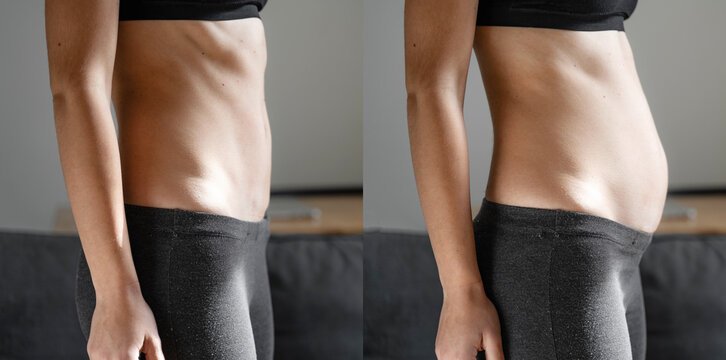
According to research out of Adelaide, diastasis recti affects approximately 25% of postpartum women. Despite the prevalence, diastasis recti remains one of the most poorly managed conditions in postpartum care. At our Birkdale & Shailer Park physiotherapy clinics, we regularly see women who have been told to “just do more core work,” only to arrive with worsening lower back & abdominal pain with a sensation of weak abdominal muscles.
The good news is that recovery is absolutely achievable. With an accurate physiotherapy assessment, a rehabilitation programme tailored to your stage of healing, and a structured way to track your progress objectively, most women see meaningful improvement — often in areas they didn’t even realise were related to their diastasis recti. This guide walks you through what diastasis recti is, what causes it, the symptoms to watch for, and exactly how to measure whether your rehab is working.
What is (and isn’t) rectus diastasis
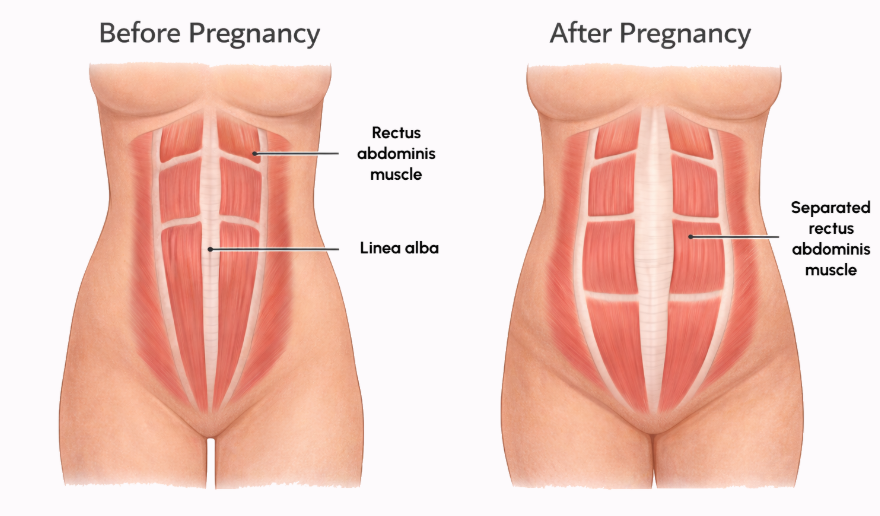
Abdominal diastasis Recti (also called abdominal separation) occurs when the left and right sides of the Rectus Abdominis muscles (also called “six-pack”) move further apart than normal. This happens because the connective tissue that joins them in the middle, called the Linea Alba, stretches and widens. When this tissue becomes stretched, the muscles can no longer support the abdomen as well, which may cause a visible bulge or “doming” in the middle of the stomach.
It’s important to note that diastasis recti is not the same as a hernia. In the case of a rectus diastasis, the abdominal wall itself is still intact, meaning there isn’t a hole in the muscle where organs push through. Hernias generally can cause substantial pain, while diastasis recti may cause increased discomfort and core muscle weakness. However, chronic thinning and stretching of the linea alba can weaken the abdominal wall, increasing the risk of hernias along the midline.
Signs and Symptoms
- Visible abdominal bulging or “doming”
- A feeling of core weakness or instability
- Lower back pain
- Pelvic floor dysfunction
- Poor posture
- Difficulty lifting or exercising
Risk factors
- Weight Gain
- Age
Several changes that occur during pregnancy can contribute to the separation of the abdominal muscles. These include:
- Hormonal changes that affect connective tissue
- Weight gain during pregnancy
- Weakening and stretching of the abdominal muscles as the baby grows
Exercises
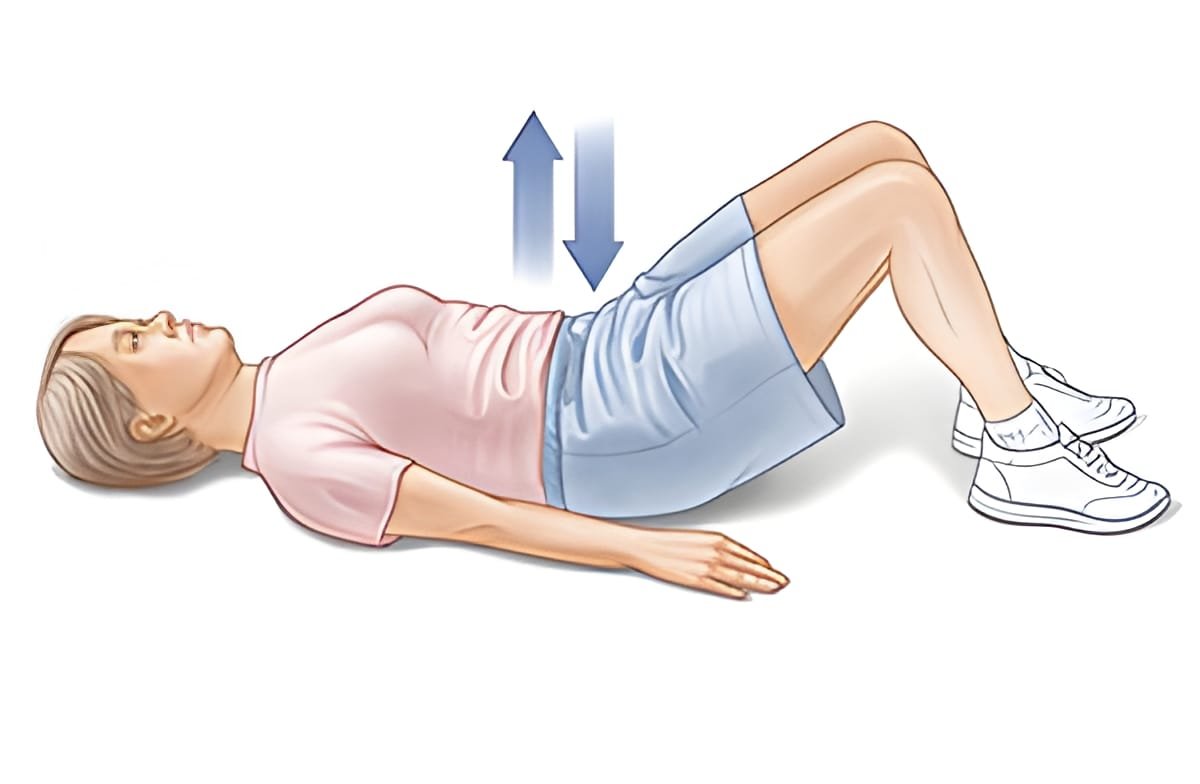
- Start in a comfortable position, such as lying on your back or lying on your side.
- Gently draw your lower stomach inwards toward your spine.
- Hold this gentle contraction for 5–10 seconds while continuing to breathe normally.
- Relax and repeat the exercise 8–10 times.
- Aim to complete 3 sets throughout the day.
Self-tests to track your recovery
- Lie flat on your back with your knees bent and feet up on bed.
- Perform a mini crunch by lifting your head off the bed & feel for a finger-width measurement at:
- above the belly button
- the belly button
- below the belly button
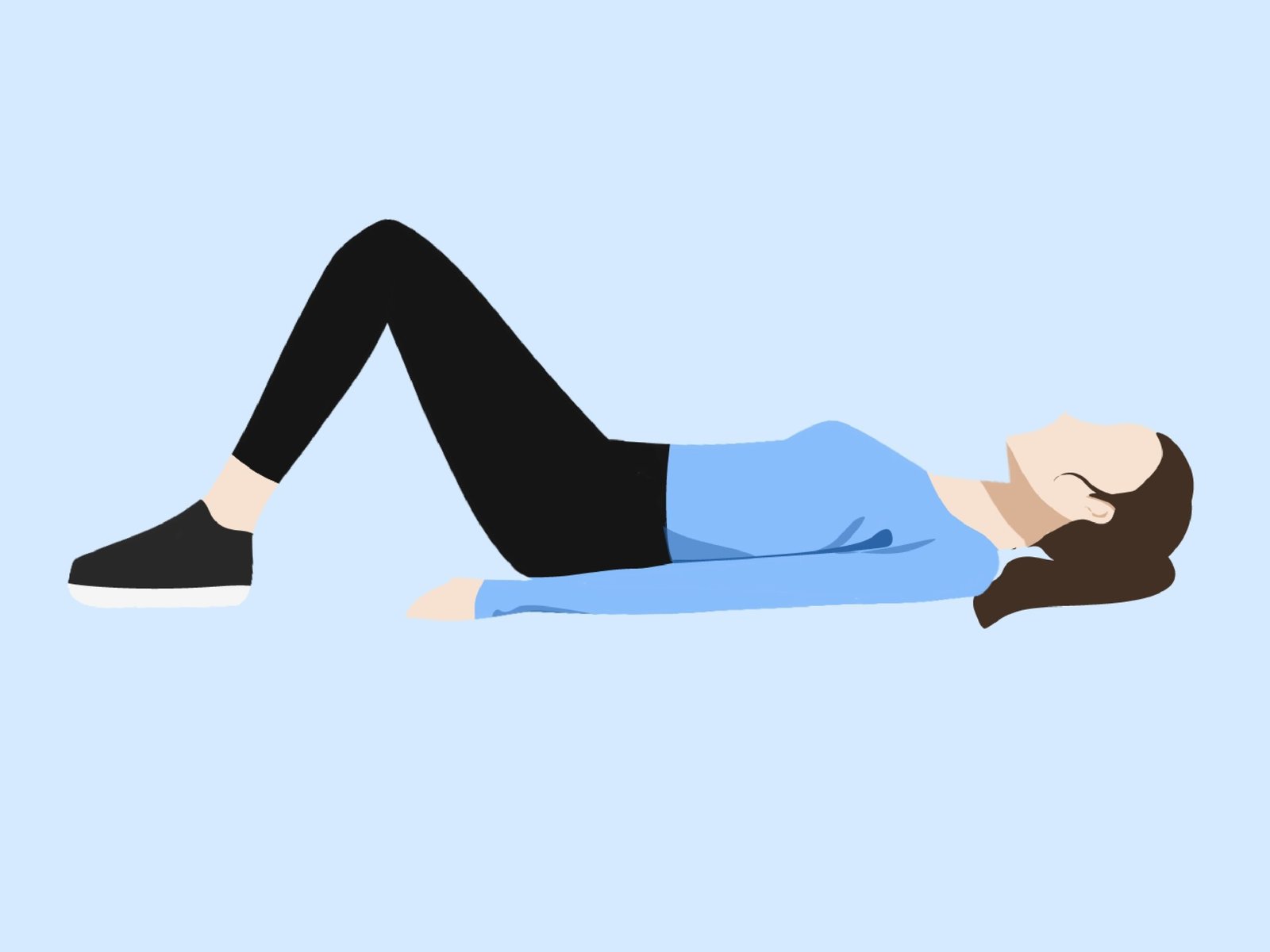
If the gap between your abdominal muscles is wider than one finger, you may still have a separation.
If you are unsure, it is recommended to seek a professional assessment from a qualified Physiotherapist.
Examples of exercises or movements to avoid
- Traditional crunches or sit-ups (until separation resolves)
- Double leg lifts
- Heavy lifting without core control
- Poorly executed planks
When is surgery considered?
Surgery may be considered if physiotherapy does not improve the separation of the abdominal muscles and symptoms remain severe. In most cases, surgery is not considered until at least 6 to 12 months after giving birth, as the abdominal muscles and connective tissue can naturally recover during this time.
How our physios at Birkdale can help you:
Our physiotherapists provide comprehensive assessments of abdominal gapping, core muscle function, and pelvic floor strength and coordination. Based on these findings, we develop tailored treatment plans that may include targeted exercise programs and hands-on therapy to support optimal recovery and function.
Help on Diastasis Recti is available, call us at 07 3822 8879.
References:
Berg-Poppe, P., Hauer, M., Jones, C., Munger, M., & Wethor, C. (2022). Use of Exercise in the Management of Postpartum Diastasis Recti: A Systematic Review. Journal of Women’s Health Physical Therapy, 46(1), 35–47. https://doi.org/10.1097/JWH.0000000000000231
de Oliveira, L. C., de Almeida, L. I. M., Lucio, M. C. F., Campos Júnior, J. F. de, & de Oliveira, R. G. (2025). Effects of conservative approaches for treating diastasis recti abdominis in postpartum women: A systematic review and meta-analysis. Medicine, 104(23), e42723. https://doi.org/10.1097/MD.0000000000042723
Du, Y., Huang, M., Wang, S., Yang, L., Lin, Y., Yu, W., Pan, Z., & Ye, Z. (2025). Diastasis recti abdominis: A comprehensive review. Hernia, 29(1). https://doi.org/10.1007/s10029-025-03417-5
Jessen, M. L., Öberg, S., & Rosenberg, J. (2019). Treatment Options for Abdominal Rectus Diastasis. Frontiers in Surgery, 6(65). https://doi.org/10.3389/fsurg.2019.00065
Reinpold, W., Köckerling, F., Bittner, R., Conze, J., Fortelny, R., Koch, A., Kukleta, J., Kuthe, A., Lorenz, R., & Stechemesser, B. (2019). Classification of Rectus Diastasis—A Proposal by the German Hernia Society (DHG) and the International Endohernia Society (IEHS). Frontiers in Surgery, 6(1). https://doi.org/10.3389/fsurg.2019.00001
Check our Previous Blogs