
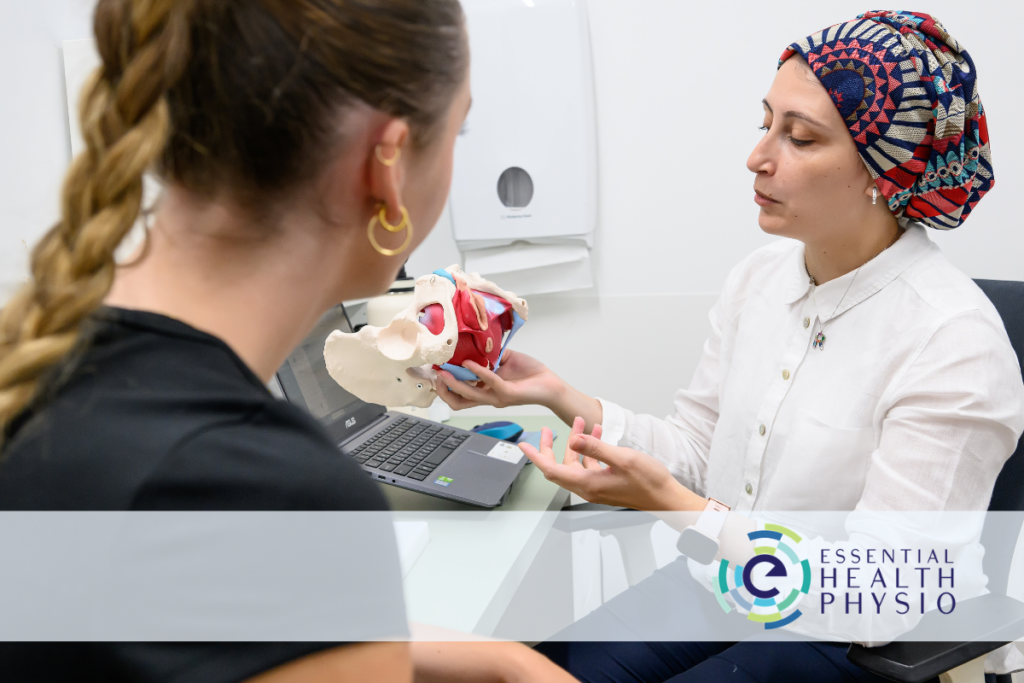
Most people first hear about pelvic floor physiotherapy during pregnancy, and it often gets shelved as something to think about after the baby arrives. But pelvic floor health is relevant at almost every stage of a woman’s life, including those who have never been pregnant at all.
Bladder leaks, pelvic pain, pressure or heaviness in the pelvis, and pain during sex are all signs that the pelvic floor may need attention. These symptoms are common, but they are not something women should have to normalise or manage quietly on their own.
What Does a Pelvic Floor Physiotherapist Actually Do?
A pelvic floor physiotherapist is a specialist trained to assess and treat the muscles, connective tissue, and nerves of the pelvic region. Sessions go well beyond being told to “squeeze and hold.” Your physio will take a detailed history, work out how your pelvic floor is actually functioning (not just how strong it is), and build a plan that fits your body and your life.
At Essential Health Physio, the Women’s Health service takes a whole-body view. Assessment includes contributing factors like posture, breathing patterns, and how intra-abdominal pressure is being managed through daily activities. Many women are surprised to learn that their pelvic floor symptoms connect to things happening elsewhere in the body.
Conditions That Pelvic Floor Physio Can Help With
Pelvic floor dysfunction shows up in more ways than most people realise. Urinary incontinence gets the most attention, but it sits alongside a range of other presentations:
- Pelvic organ prolapse
- Pelvic pain conditions including endometriosis, vaginismus, and pain with intercourse (dyspareunia)
- Pelvic girdle pain and sacroiliac joint discomfort during pregnancy
- Post-surgical recovery after caesarean section, episiotomy, hysterectomy, or pelvic floor repair
- Diastasis recti (abdominal separation) following birth
- Bladder urgency and frequency, even without leakage
If any of those sound familiar, you are far from alone, and you are not stuck with it.
The Kegel Myth That Needs to Be Retired
One of the most persistent misconceptions about pelvic floor health is that kegel exercises are the right treatment for everyone. They are not.
A significant number of women have a pelvic floor that is too tight and overactive, rather than weak. For this group, doing more pelvic floor strengthening exercises will not help. It will make things worse. An overactive pelvic floor needs to be released and retrained, not tensed further.
Some signs that your pelvic floor may be over-tight rather than underperforming:
- Difficulty starting the flow of urine
- Thin or pencil-like bowel motions
- Pain during or after using the bathroom
- Bladder urgency that comes on fast and is hard to defer
- A feeling of not emptying properly
- Pain with penetrative sex
This is exactly why a proper pelvic floor assessment matters before starting any exercise program. Treatment for an overactive pelvic floor typically involves manual therapy, breathing retraining, and relaxation techniques, not a strengthening protocol.
What to Expect at Your First Appointment
Coming in for a pelvic floor assessment can feel daunting, particularly if you have not seen a women’s health physio before. Your physiotherapist will take time to get to know your full health history and what your day-to-day symptoms actually look like. From there, the assessment may include an internal examination (only ever done with your informed consent), observation of posture and movement, and a conversation about your bladder and bowel habits.
You will leave with a clear picture of what is contributing to your symptoms, and a management plan built around your goals, not a one-size-fits-all approach.
Prenatal and Postnatal Care: More Than Just the Pelvic Floor
During pregnancy, pelvic floor physiotherapy supports women dealing with pelvic girdle pain, pubic symphysis discomfort, sacroiliac joint issues, and the general musculoskeletal aches that come with a changing body. Guidance on safe movement and load management through each trimester forms part of this.
After birth, the focus shifts toward restoring core function, addressing diastasis recti, and supporting a gradual return to exercise. The timeline varies depending on the individual, the type of birth, and how the recovery is progressing.
For women looking to build strength and function once the initial rehab phase is complete, Clinical Pilates can be a well-suited next step. It allows for progressive loading in a supported environment, with attention to how the core and pelvic floor are working together.
Self-Management Strategies That Actually Fit Into Real Life
Treatment is not purely hands-on. A large part of pelvic floor physiotherapy is about equipping you with tools and strategies for everyday life. Depending on what your assessment reveals, this might include:
- A bladder diary to track patterns and identify what is triggering symptoms
- Bladder training to reduce urgency and extend the time between bathroom visits
- Toilet posture guidance, because position matters more than most people realise
- Pressure management strategies for activities like lifting, sneezing, or exercise
- Breathing techniques that reduce downward pressure on the pelvic floor
These strategies are designed to fit your actual routine, not to add another complicated protocol to manage.
Pelvic Floor Physiotherapy: Your Questions Answered
| Questions | Answers |
|---|---|
| What is pelvic floor physiotherapy? | Pelvic floor physiotherapy is a specialist form of physiotherapy that assesses and treats the muscles, connective tissue, and nerves of the pelvic region. It addresses conditions including urinary incontinence, pelvic pain, pelvic organ prolapse, and post-surgical recovery, using a whole-body approach that considers posture, breathing, and intra-abdominal pressure. |
| Is pelvic floor physiotherapy only for women who have been pregnant? | No. Pelvic floor physiotherapy is relevant at almost every stage of a woman’s life, including those who have never been pregnant. It helps women dealing with incontinence, pelvic pain conditions such as endometriosis or vaginismus, pelvic organ prolapse, and post-surgical recovery, regardless of pregnancy history. |
| Can kegel exercises make pelvic floor problems worse? | Yes, for some women. Those with an overactive or overly tight pelvic floor should not do strengthening exercises, as this can worsen symptoms. Signs of an over-tight pelvic floor include difficulty starting urination, bladder urgency, pain with intercourse, and pain during or after using the bathroom. A pelvic floor assessment is essential before starting any exercise program. |
| What happens at a pelvic floor physiotherapy assessment? | A pelvic floor physiotherapy assessment includes a detailed health history, a discussion of your current symptoms, and an assessment of posture and movement. An internal examination may be offered (always with your informed consent). You will leave with a clear understanding of what is contributing to your symptoms and a personalised management plan. |
| How does pelvic floor physiotherapy help after pregnancy? | Postnatal physiotherapy helps restore core strength, address diastasis recti (abdominal separation), and support a safe return to exercise after birth. The approach is tailored to the individual depending on whether the birth was vaginal or by caesarean section, and how recovery is progressing. |
When Is the Right Time to Book?
If you have been managing symptoms on your own, relying on Google for exercises, or assuming things will improve with time, it may be worth getting a proper assessment. Pelvic floor dysfunction rarely resolves without some targeted input, and patterns that go unaddressed tend to become more entrenched.
You do not have to be postpartum to book. You do not have to be leaking. If something feels off in your pelvic region, that is reason enough to have it looked at.
The Women’s Health team at Essential Health Physio in Birkdale offers pelvic floor physiotherapy assessments for women at every stage of life. If you are ready for answers, support, and a tailored plan, book your appointment today.
