
Total hip and knee replacements are effective treatment options to relieve chronic joint pain and improve mobility. But when is surgery actually needed, and how important is physiotherapy before and after the operation? In this blog, you will understand when a hip or knee replacement is indicated and how pre- and post-operative physiotherapy can significantly improve your outcome.
When Do You Need a Hip or Knee Replacement?
A total hip replacement or total knee replacement is usually recommended when joint damage begins to impact your quality of life & activities of normal living.
The most common cause of joint damage is osteoarthritis, where the protective cartilage around the joint wears down over time. This leads to pain, stiffness, and reduced function.
Other conditions that may require joint replacement include:
- Rheumatoid arthritis
- Avascular necrosis (reduced blood supply leading to death of bone)
- Post-traumatic arthritis (after injury)
- Joint degeneration or deformity
Signs & Symptoms You May Need Joint Replacement Surgery
Surgery is often only considered after non-operative treatments—such as physiotherapy, medication and injections—have been ineffective in improving:
- Persistent hip or knee pain
- Difficulty walking, climbing stairs, or standing for long periods
- Joint range of motion
- Night pain
- Ability to perform daily activities
Pre-Operative Physiotherapy (“Prehab”) Matter
Pre-operative physiotherapy plays a critical role in improving surgical outcomes.
Prehab at Essential Health Physiotherapy Shailer Park focuses on:
- Strengthening muscles around the hip and knee
- Improving joint mobility
- Education on post-operative expectations
- Preparing you for safe movement after surgery

Benefits of Pre-Surgery Physiotherapy
Research shows that patients who complete prehab often experience:
- Quicker recovery after surgery
- Greater strength and mobility
- Reduced post-operative complications
- Improved confidence during rehabilitation
At Essential Health Physio, we will tailor your pre-surgery rehab program to ensure you go into surgery as strong and prepared as possible.
What exactly happens with a Joint Replacement?
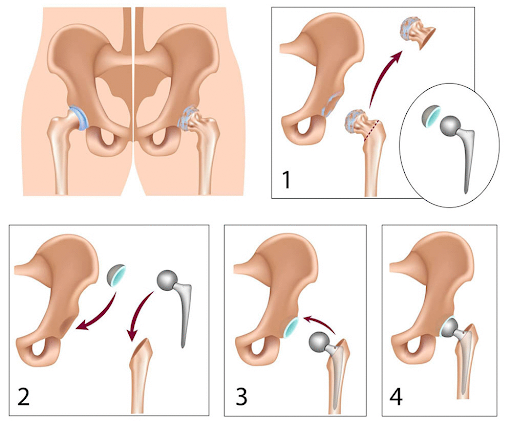
The hip is a ball-and-socket joint:
- The ball = top of the thigh bone (femur)
- The socket = part of the pelvis where the ball sits in
In a total hip replacement:
- The ball is replaced with a metal or ceramic ball
- The socket is reshaped and fitted with a prosthetic cup
- A smooth lining is added to allow pain-free movement
The knee joint involves:
- The thigh bone (femur)
- The shin bone (tibia)
- The kneecap (patella)
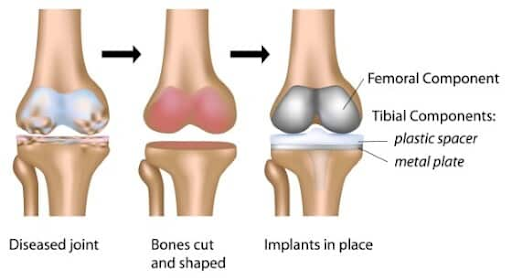
In a total knee replacement:
- The damaged cartilage of the femur & tibia is removed
- The end of the femur & top of the tibia are covered with metal components
- A plastic spacer sits on top of the tibia
A joint replacement recreates a smooth joint surface, eliminates “bone on bone” & reduces pain + improving function.