
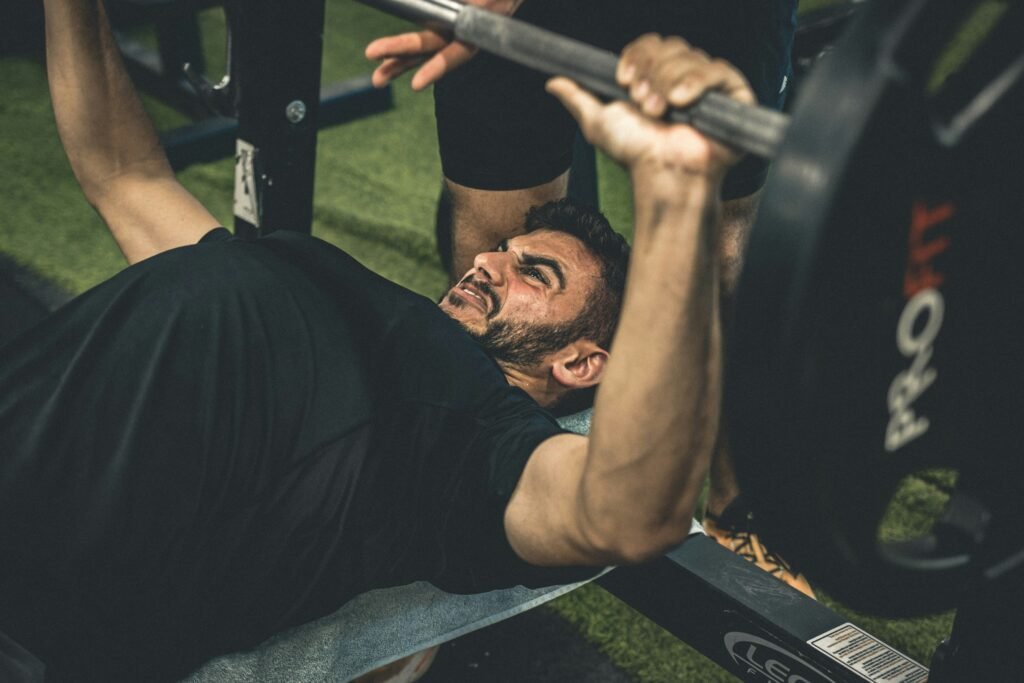
Photo by Shoham Avisrur on Unsplash .
The bench press is one of the most performed exercises in any gym, yet it remains one of the most misunderstood. At Essential Health Physio Birkdale, we see both beginners who start figuring out their first set and seasoned lifters who are chasing a new personal record. A strong understanding of the fundamentals helps prevent shoulder injuries and allows steady progress.
The bench press questions I answered at Essential Health Physiotherapy Birkdale never stop. This compound movement requires precise muscle control & specific technical cues for safety & effeciency. In this guide, we’ll break down exactly what’s happening anatomically when you press a barbell off your chest, establish the foundational technique that underpins every variation, and explore the key bench press optimisations you should know — so you can build a stronger, more resilient upper body with confidence.
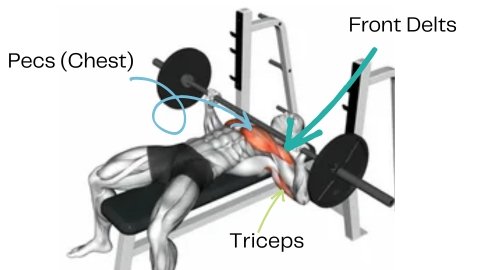
Bench Press’s Anatomy
The bench press is a compound lift that involves pushing a barbell up and down in a controlled manner. The major muscle groups involved are the pectoralis major, triceps, and, to a lesser extent, the anterior deltoid muscles (front of the shoulder). These are the muscles that will produce the majority of the work. Other muscles involved include the rotator cuff, scapular group, and abdominal/core muscles. These muscles work together to stabilise the body so the major muscles can do work.
The Fundamentals of Bench Press
- Lie flat with the feet firm on the floor.
- Line up your eyes directly under the bar.
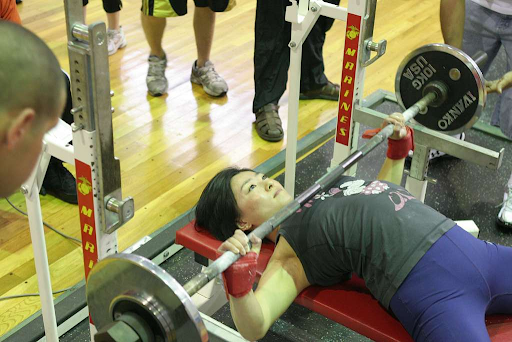
- At first, place your hands just on the bar, just wider than your shoulders (more on this in the optimisations and variants section).
- Make sure the barbell sits directly above the wrist joint. (**the wrists will be angled back slightly, but not too far)
- Breathe in and push the bar up and line it over your chest.
- Hold your breath as you lower the bar in a controlled manner, and ensure the shoulders and elbows do not flare out.
- Pause a moment once contact is made with the chest, then breathe out as you push upwards.
Optimisations And Variants of Bench Press
Rotator Cuff
There are several points of easy optimisations of bench press, even if you are lifting recreationally. Some of it is to do with safety, while others are to improve your strength more optimally.
First, we deal with safety. You will recall that the shoulders and rotator cuff play a large role in the lift, even if they are not directly responsible for the upward movement of the barbell. That is because they are the stabilising joints. It’s quite common for the rotator cuff to be quite weak in a lot of people – whether it’s from posture, compensation from the upper trapezius, or just lack of coordination. Moving heavy weights at a high volume creates circumstances where the weakest link can be injured. So it becomes very important for the rotator cuff to be sufficiently active throughout the lift. In order to achieve this, we want to create external rotation forces in the shoulder joint passively. Squeeze the bar as if you were bending it, and this will add external rotation forces in the shoulders, therefore stabilising the joint.
Leg Drive
We will need to introduce the concept of leg drive, or hip drive.
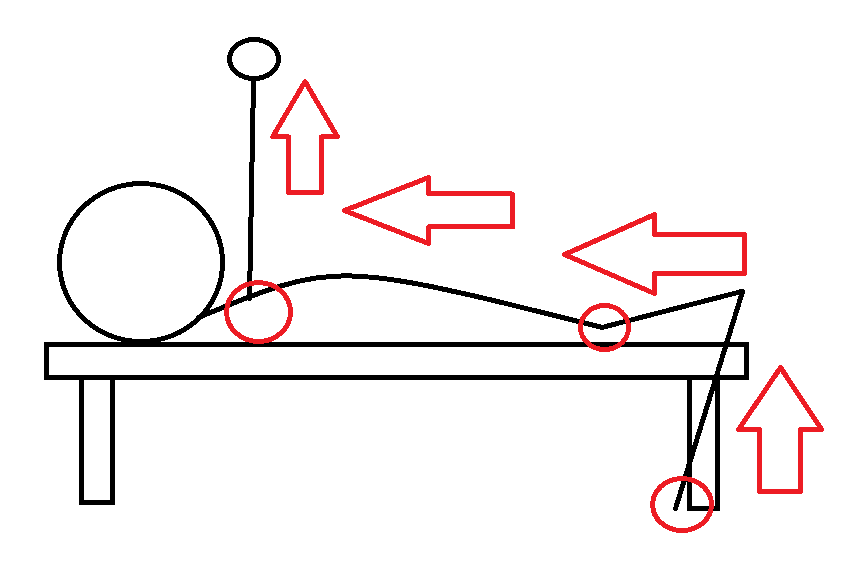
This can be visualised with the above diagram. Leg drive utilises the transfer of force during the pushing phase through the legs and hips. First, ensure there are 3 strong points of contact in the shoulder blades, the hips, and the feet. As you push the bar of the chest, push through the feet as if you were sliding yourself up the bench. Pinning your shoulder blades down onto the bench will stabilise you, allowing the force to travel through the legs and hips and assisting with the movement of the barbell.
Utilising leg drive not only maximises strength, but it also acts as a tool to stabilise the joints to prevent injury and create efficient movement. It also teaches the body where and how to brace during everyday push movements.
If you are struggling with your bench press, come see me for a 1-on-1 assessment in Birkdale. I look forward to assisting you! I have also demonstrated a “How to bench press” video posted to our social media.
Reach Brendan (our Exercise Physiologist) at 07 3822 8879 for effective & safe Bench Press.
Further reading
Catalyst Athletics’ Greg Everett (Renowned US weightlifting coach): https://www.catalystathletics.com/article/120/The-Bench-Press-Benefits-and-Risks/ SoCal Powerlifting on Leg Drive: https://www.socalpowerlifting.net/post/leg-drive-the-unsung-hero-of-a-great-bench
Check our Previous Blogs
