
Photo by Dane Wetton on Unsplash .
“Just Stretch It and Rest”: Why That Advice Can Slow Injury Recovery.
Chances are…someone has given you the classic advice: “Just rest it and stretch it.”
This advice, while seemingly sound, misses some very important facts about tissue healing and recovery. Modern sports medicine and rehabilitation research show that this advice is often incomplete and sometimes even counterproductive.
Where the Myth Comes From
Injury management used to follow a very passive approach: stop moving, stretch tight muscles, and wait for the pain to go away.
This thinking came from a few assumptions:
- Pain means tissue damage
- Tightness means muscles need stretching
- * Rest allows the body to heal faster
Pain does not always equal damage, tight muscles are not always the problem, and too much rest can actually slow recovery.
Why Rest Alone Often Backfires for Recovery?
When you completely rest an injured area for long periods, muscles weaken quickly, joints stiffen and overall coordination and stability decline.
Even short periods of inactivity can cause measurable strength loss. That means when you eventually return to activity, the tissues may actually be less prepared to handle load.
Modern rehabilitation encourages early, controlled loading, meaning the injured area gradually returns to movement and strength within pain limits.
Stretching Isn’t Always the Recovery’s Solution
Stretching has benefits, but it’s often misunderstood.
Many people assume that if something feels tight, it must need stretching. But tightness can sometimes be the body’s protective response to instability or weakness.
In these cases, stretching alone often provides limited relief.
In fact, aggressive stretching early in an injury can worsen tissue damage, particularly with muscle strains or tendon injuries.
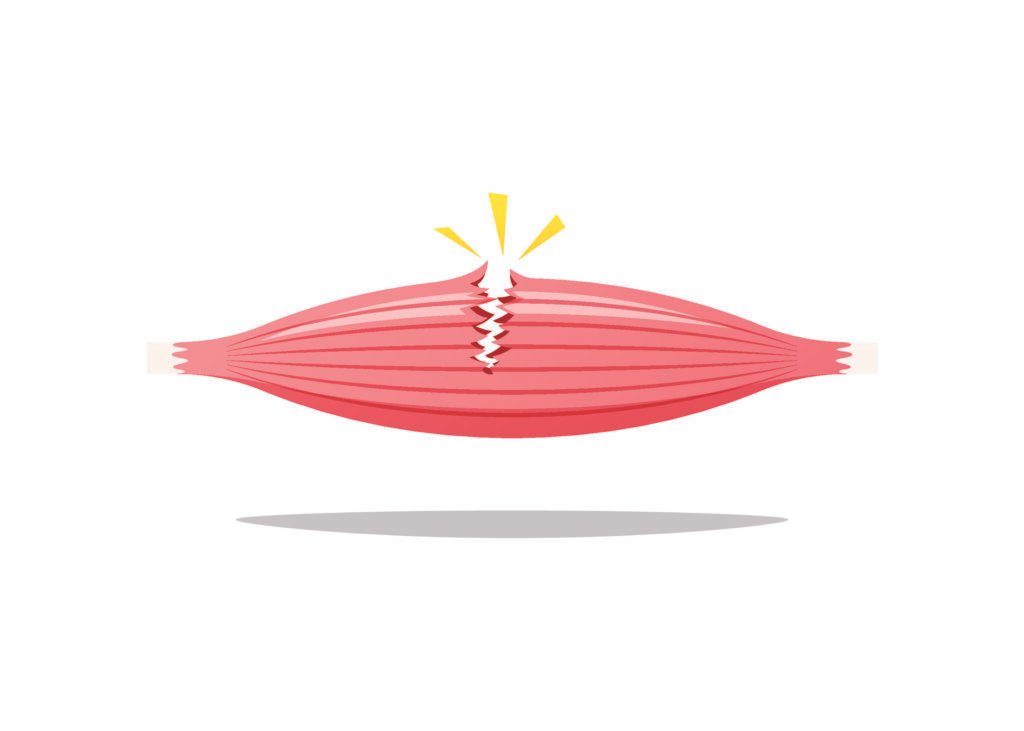
It helps to understand the mechanism of injury— when a muscle is injured or ‘strained’, that means there has been damage or ‘tears’ to the muscle fibres. Stretching can exacerbate the damage, leading to more inflammation in the area and delayed healing.
The Shift Toward Active Recovery
Sports medicine has shifted toward more active approaches to healing.
One widely used rehabilitation framework is PEACE & LOVE, which emphasises protecting the injury initially but then gradually restoring movement and load.
Instead of relying only on passive treatments, modern recovery often includes: Gentle range-of-motion exercises, Progressive strength training, Gradual return to normal movement patterns, Building tissue capacity over time
This approach helps the body adapt and rebuild stronger tissues.
When Rest and Stretching Do Help?
That doesn’t mean rest and stretching are useless.
They still play a role when used appropriately.
1. Short periods of rest can help in the early stages of acute injuries, especially when swelling or significant pain is present.
2. Stretching can improve flexibility and mobility when incorporated into a broader program that includes strength and stability work.
The Real Goal of Injury Recovery
The ultimate goal of rehabilitation isn’t just to remove pain.
It’s to restore the body’s ability to handle load, movement, and stress without breaking down again.
Call us at 07 3132 0898 (Shailer Park) for an Exercise Physiology consult
References
Dubois, B., & Esculier, J. F. (2019).
Soft-tissue injuries simply need PEACE and LOVE.
British Journal of Sports Medicine https://bjsm.bmj.com/content/54/2/72?utm_source=chatgpt.com
Leddy, J. J., et al. (2023).
Rest and exercise early after sport-related concussion: a systematic review and meta-analysishttps://bjsm.bmj.com/content/57/12/762.abstract?utm_source=chatgpt.com
Check our Previous Blogs
